


Condensate return systems: why sending hot water back is the easiest steam saving you're missing
Every kilogram of steam that does useful work in your plant leaves behind a kilogram of hot condensate. That condensate is distilled water sitting at or near boiling point, and it still holds a meaningful slice of the energy your boiler paid for. Yet in a surprising number of Australian factories it gets dumped to drain — steaming quietly out of a vent or trickling into a pit while the boiler works harder to heat cold make-up water in its place.
A well-designed condensate return system fixes that. It is one of the highest-return, lowest-drama upgrades available on a steam plant, and it is often the first thing we look at when a site asks us to cut fuel use.
What condensate is really worth
When steam gives up its latent heat at the point of use, it turns back into water — condensate — that is still close to the steam temperature. At 5 bar g, that condensate leaves the process at roughly 159 °C. Returning it to the boiler house means the feedwater it replaces doesn't have to be heated from a cold-mains temperature of maybe 15 °C all the way back up. That is sensible heat you already own.
There are two separate savings, and it's worth keeping them apart:
- Energy. Hot condensate carries roughly 15–20% of the original fuel energy back to the boiler as sensible heat. The hotter you keep it on the way home, the more you keep.
- Water and chemicals. Condensate is high-purity distilled water. Every litre returned is a litre of treated make-up water you don't buy, don't soften, and don't dose with treatment chemicals. On a metered water and trade-waste bill, that adds up quickly.
Put simply, condensate return attacks your fuel bill, your water bill and your chemical bill at the same time. That is why the payback is usually measured in months, not years.
What a condensate return system actually contains
“Condensate return” sounds like a single item, but it's a small system with a few parts that all have to work together:
- Steam traps at each drain point that release condensate but hold back live steam. Get these wrong and you either flood the process or blow live steam straight down the return line.
- Return lines sized for a two-phase mix of water and flash steam, not just for liquid.
- A condensate receiver — a vessel that collects returning condensate and vents flash steam.
- A pump (electric or pressure-powered) to lift condensate back to the boiler-house feedtank when it can't get there by gravity.
- A feedtank where the returned condensate mixes with make-up water before it's pumped into the boiler.
Because those parts sit across valving, heat transfer and metering, condensate return rarely lives in one neat box. It's a system-design question, which is where our steam consultancy and system design work usually starts.
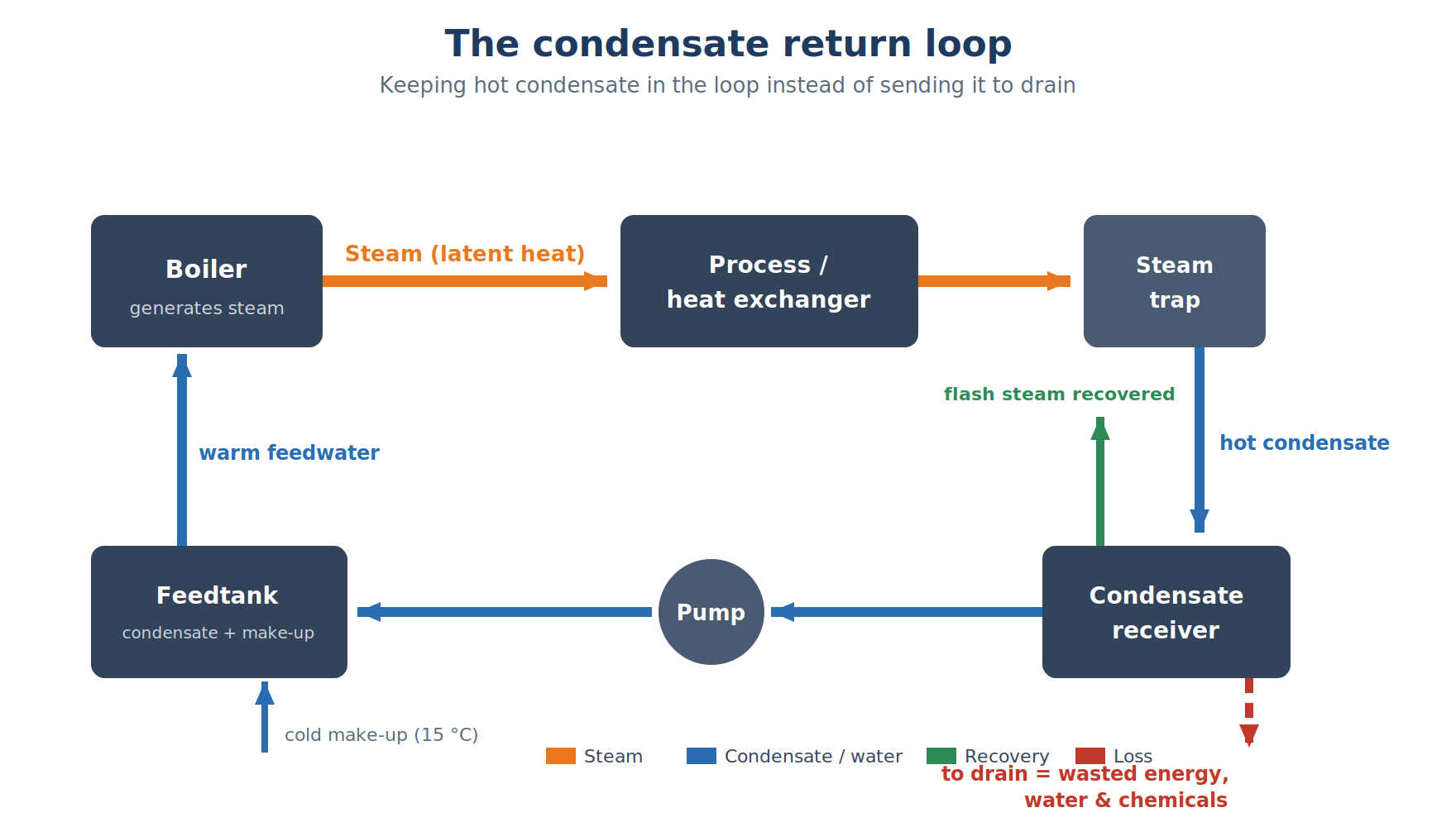
The condensate return loop: hot condensate and recovered flash steam stay in the system instead of going to drain.
Where condensate return systems go wrong
Most underperforming return systems fail in a handful of predictable ways.
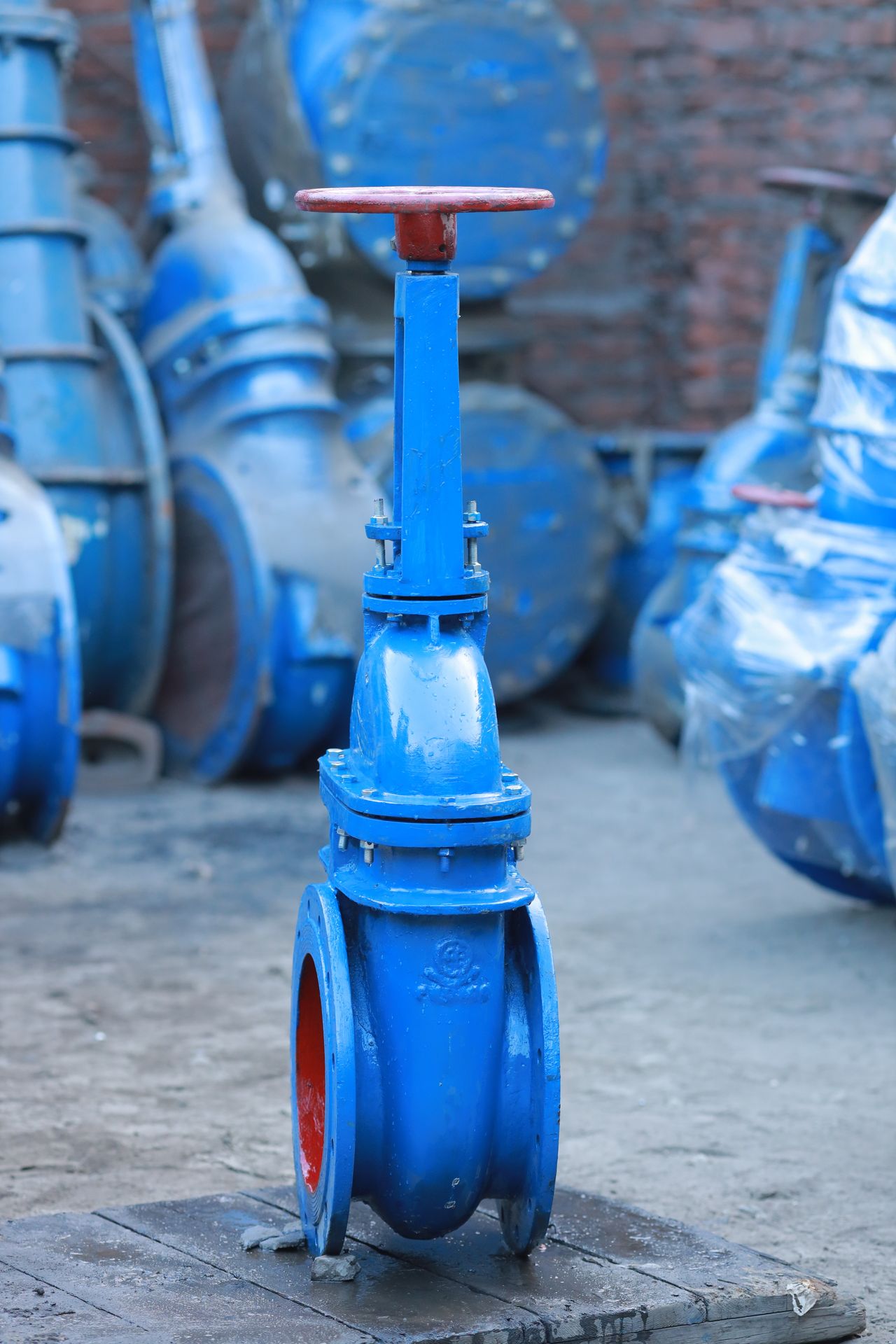
Failed steam traps. A trap stuck open passes live steam into the return line, wasting energy and pressurising the line so other traps can't drain. A trap stuck closed backs condensate up into the process and kills heat transfer. Trap population is dynamic — a proportion fail every year — so traps need a survey programme, not a “fit and forget” attitude. Choosing and maintaining the right traps sits inside steam, condensate and water valving.
Undersized or waterlogged return lines. When hot condensate drops in pressure on its way back, some of it flashes to steam. A return line sized only for liquid can't carry that vapour, so it becomes noisy, causes waterhammer and pushes back on the traps.
Lost flash steam. Condensate released to a lower pressure gives up flash steam at the receiver vent. Vented to atmosphere, that's visible energy walking out the roof. Captured, it can preheat feedwater or supply a low-pressure load — the same recovery principle behind our flash steam recovery project at Teys Wagga.
No measurement. If you don't meter make-up water and condensate return, you can't see the losses and you can't prove the savings. Metering turns “we think it's better” into a number. That's the role of steam and water metering.
A quick way to size the prize
Before committing to anything, you can estimate the fuel saving from returning condensate. The sensible heat carried by hot condensate, compared with cold make-up, is:
Q = ṁ × c × ΔT
where ṁ is the condensate mass flow (kg/hr), c is the specific heat of water (≈ 4.19 kJ/kg·°C), and ΔT is the temperature difference between returned condensate and the cold make-up water it replaces.
Return 2,000 kg/hr of condensate at 90 °C instead of drawing 15 °C make-up, and you recover roughly 2,000 × 4.19 × 75 ≈ 629,000 kJ/hr — about 0.63 GJ/hr of heat that would otherwise come from burning gas. Run that around the clock and the fuel saving is substantial before you've counted a drop of water or a gram of chemical. These are industry rule-of-thumb figures for scoping only; the real numbers come from measuring your plant.
What good looks like
Done properly, a condensate return upgrade is quietly transformative. Returning more condensate, hotter, means the feedtank sits warmer, the boiler fires less to make the same steam, and blowdown and chemical dosing both fall because you're feeding cleaner water. On the Teys Wagga project, capturing energy that was previously vented let the plant preheat 16,000 litres per hour of feedwater from 98 °C to 125 °C and recover around 3.3 GJ/hr — over a 30% cut in thermal energy per head processed. Other sites we've worked with have cut gas use by around 40% once condensate and heat recovery were addressed together, and on most projects for a large exporter like Fletcher International the return on investment came in under 12 months.
The point isn't that every plant will hit those exact figures — it's that the hot water you're currently sending to drain is money, and getting it back is well-trodden engineering.
Where to start
A sound sequence is: survey the steam traps, meter what's actually being returned versus made up, then design the receiver, pumping and flash recovery to suit. Whether it lands as an off-the-shelf skid or a bespoke package built to your site, and however it's installed under our turnkey installation and project management, the principle holds: the cheapest steam in your plant is the condensate you already made.
If you'd like to know what your condensate is worth, get in touch and we'll help you put a number on it.