

The valves and traps in your steam system decide how much of the fuel your boiler burns actually reaches the process. We source, stock and specify steam, condensate and water valving for industrial plants across Australia, and we size it to the duty rather than to the pipe.
Steam, condensate and water valving
🌎 We globally source and stock a comprehensive range of steam, condensate, and water valving solutions.

What we supply
Get started
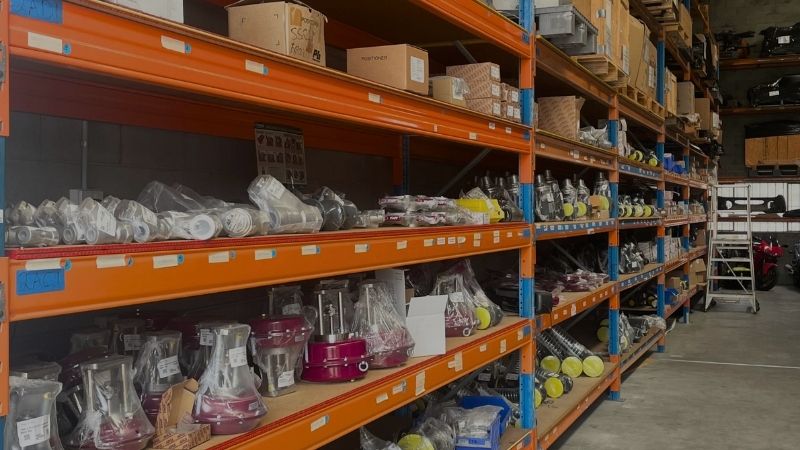
We hold a substantial local inventory sourced from leading valve manufacturers in Europe, America and Asia. Every product line comes with technical selection from our engineers, so you get the right valve for the application, not just the one that matches the bore.

Steam traps
Thermodynamic, thermostatic and mechanical traps, supplied individually or as complete trap stations with isolation, strainer and test valves. A trap stuck open passes live steam into the return line. A trap stuck closed backs condensate up into the process and stops heat transfer. We select the trap type for the equipment and the condensate load, and we stock the common sizes for fast replacement.

Pressure reducing valves
Direct-acting valves for small, steady loads and pilot-operated valves where you need tight control across a wide flow range. We can supply the complete reducing station: isolation valve, strainer, separator, the reducing valve itself, gauges each side and a downstream safety valve sized for the failed-open case.

Control valves
Modulating and on/off control valves with pneumatic or electric actuators for temperature, pressure and level control on heat exchangers, cookers, sterilisers and process vessels.
Isolation valves
Gate, globe, ball and bellows-sealed valves rated for saturated steam service, for safe maintenance and section isolation.
Safety and relief valves
Safety valves for boilers, reducing stations and pressure vessels, sized to the protected system rather than picked from a chart.
Separators, strainers and drainage
Steam separators, Y-strainers, sight glasses, air vents and vacuum breakers. These are the small items that keep steam dry and mains drained, and they are the ones most often missing from a plant that hammers.
Condensate and water valves
Check valves, float valves and water control valves for condensate return lines, cooling circuits and make-up water.
Spares and rebuild kits
Seats, discs, elements, actuators and rebuild kits for the brands we supply, so a failed valve becomes a maintenance job rather than a replacement project.
Which steam trap suits which application?
Trap selection is where most of the value in a valving order sits. The table below is a starting point. Operating pressure, condensate load, back-pressure in the return line and how quickly the equipment needs to vent air all change the answer, which is why we ask about the duty before we quote.
| Trap type | How it works | Typical application | Watch out for |
|---|---|---|---|
| Thermodynamic (disc) | Flash steam under the disc snaps it shut; condensate lifts it open | Steam main drip legs, tracing lines, high pressure drains | Sensitive to high back-pressure, can be noisy |
| Ball float with thermostatic air vent | Float opens the valve as condensate rises; the air vent clears air at start-up | Heat exchangers, jacketed vessels and any equipment with a varying load | Float damage from waterhammer, freezing on exposed outdoor lines |
| Inverted bucket | Bucket sinks in condensate and opens the valve, floats in steam and closes it | Mains drainage and steady loads at constant pressure | Loses its water seal on superheated steam, slow to vent air |
| Balanced pressure thermostatic | Element expands at steam temperature and closes, contracts as condensate cools and opens | Tracing, air venting, small and intermittent loads | Holds back condensate until it cools, so not suited to process equipment that needs immediate drainage |
If you are not sure what is on your plant now, a trap survey answers that first.
What does poor valving cost you?
The losses from wrong or failed valving rarely trip an alarm. They show up as a fuel bill that creeps up, a process that takes longer than it used to and a maintenance log full of the same repairs.
A population of traps where a proportion have failed open sends live steam down the condensate line. Wet steam reaching a control valve erodes the trim and destroys control, which is why we insist on a separator upstream. A reducing valve picked to match the pipe rather than the load hunts, overshoots and wears its seat. Each of these is a valving decision, and each is fixable.
There is also the energy sitting in condensate that never makes it home. Hot condensate carries roughly 15 to 20% of the original fuel energy back to the boiler as sensible heat, and every litre returned is a litre of treated make-up water you do not buy. Getting traps and return-line valving right is the first step in the condensate return systems that capture that energy.
Do you survey steam traps?
Yes. Trap populations are dynamic. A share of them fail every year, and a plant that has never been surveyed usually has more failed traps than anyone expects. A survey tags every trap, records its type, size, pressure and application, tests whether it is passing steam or holding back condensate, and produces a ranked replacement list with an estimated steam loss per failed trap.
A trap survey is normally the starting point for the wider work we do in steam consultancy and system design, because it tells you where the steam is going before anyone proposes a change.
Industries we work in
- Meat processing. Rendering, cooking, sterilising and hot water loads that run around the clock. Our work at Teys Wagga, EC Throsby and Cowra sits here.
- Food and beverage. Precise temperature control for cooking, pasteurising and cleaning, as on the Kellogg's hot water system.
- Healthcare. Steam quality and sterilisation loads where reliability matters more than price.
- Timber and paper. Drying and process steam at scale.
- OEMs. Valving specified and supplied for equipment builders who need the right components on every unit.
Results from the plants we work with
- Cowra Meat Processors reported a 40% reduction in gas usage following the upgrades we implemented, which included optimum system design and process efficiency work.
- Fletcher International Exports reported several million dollars in savings from improvements and upgrades, with an ROI on most projects of less than 12 months.
- The flash steam recovery project at Teys Wagga now recovers about 3.3 GJ per hour that was previously vented to atmosphere, cutting thermal energy per head of cattle processed by more than 30%.
- Nestlé Purina Blayney engaged us for our technical skills and, in their words, keep calling us back for our helpful, can-do attitude.
Projects like these start with the basics being right: traps that work, steam that arrives dry and reducing stations sized for the load.
How we work
- Tell us the duty. Pressure, flow or condensate load, the equipment it serves and what you are trying to fix. If you do not have those numbers, a site visit, a trap survey or steam and water metering gets them.
- We select and size. Our engineers pick the valve or trap for the application, not the pipe diameter, and explain the choice.
- Supply from stock. We ship from local inventory to every Australian state and territory, from city plants to remote sites.
- Install and commission if you need it. Valves can be supplied loose, built into standard and bespoke packages or heat exchanger packages, or installed and commissioned under our turnkey installation and project management service.
Related reading
- Condensate return systems: why sending hot water back is the easiest steam saving you are missing
- Steam pressure reduction: why the right pressure at the point of use saves fuel and equipment
- Optimum steam distribution: getting dry steam to the point of use at the right pressure
- Case study: process energy recovery, flash steam project at Teys Wagga
Frequently asked questions
How do I know which steam trap is right for my equipment?
It depends on operating pressure, condensate load, back-pressure in the return line and how quickly the equipment needs to vent air at start-up. Process equipment with a varying load usually suits a float trap. Mains drip legs usually suit a thermodynamic trap. Send us the duty and we will size and select it, or use the table above as a first pass.

Why is line size not the same as valve size?
A reducing or control valve is sized on the steam load it has to pass and the pressures either side of it, not on the pipe it sits in. A valve chosen to match the pipe is usually oversized, so it hunts and wears. We size every valve on duty and explain the calculation.

Can you supply a complete pressure reducing station, not just the valve?
Yes. A reducing station needs an isolation valve, strainer and separator upstream, gauges each side and a safety valve downstream sized for the failed-open case. We supply the station as a set, or as a tested package under standard and bespoke packages.

How often do steam traps fail, and how often should they be surveyed?
Every trap population loses a proportion of traps each year, and failed traps are invisible without testing. An annual survey is a sensible baseline for most plants. Sites with high pressure or dirty steam benefit from more frequent checks.
Do you supply replacement parts for the valves you sell?
Yes. We stock spares, rebuild kits, elements and actuator components for the brands we supply, so most failures can be repaired rather than replaced.
Can you ship valves to regional and remote sites?
Yes. We supply from local inventory to facilities in every Australian state and territory, including remote processing sites.
Need help selecting the right valve for your system?
Send us the duty or ask for a trap survey. Call +61 493 272 864, email sales@energyspecialties.com.au, or use the contact form.
Get in touch