


Steam pressure reduction: why the right pressure at the point of use saves fuel and equipment
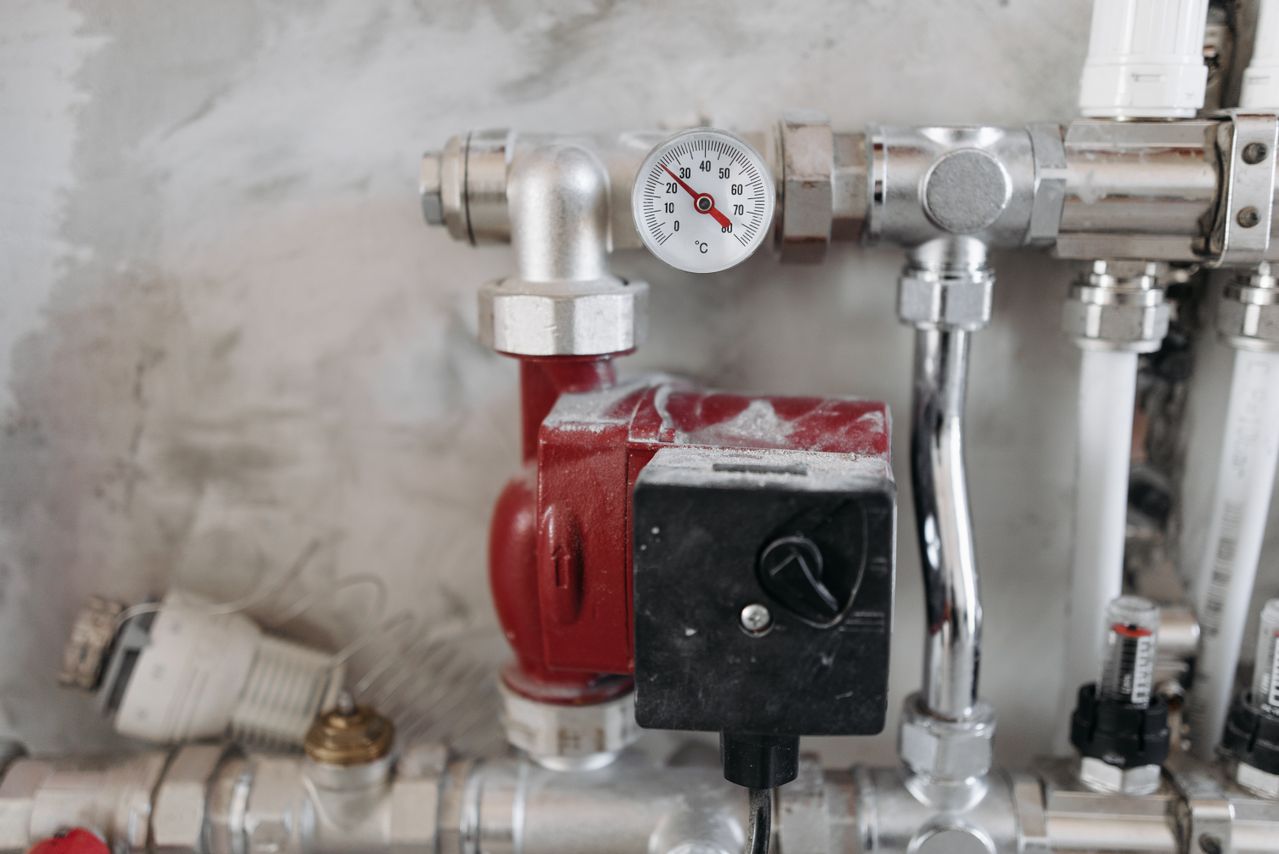
Ask why a plant distributes steam at 10 bar but runs most of its processes at 3 or 4, and the answer is one of the most useful principles in steam engineering: generate and distribute high, then reduce close to the point of use. Steam pressure reduction is how that last step is done, and doing it well protects your equipment, steadies your process and trims your fuel bill. Doing it badly causes waterhammer, wrecks control valves and trips safety valves.
Why not just generate at the pressure you need?
It's tempting to think you'd save energy by making steam at the low pressure your process actually uses. In practice, distributing at higher pressure and reducing locally is almost always better, for a few connected reasons.
Higher-pressure steam is denser, so it carries more energy in a smaller pipe. That means smaller-bore mains, less surface area radiating heat, and less capital tied up in pipework — the logic set out in our piece on optimum steam distribution. High-pressure distribution also acts as stored energy that cushions sudden demand, and it keeps the steam drier as it travels. You then drop the pressure at each process to exactly what that equipment is rated for.
There's a quality bonus, too. When saturated steam is throttled to a lower pressure, its temperature falls but it keeps most of its energy — so the steam arriving at the process is actually drier than it was upstream. Reduction, done right, improves steam quality at the point of use.
What a pressure-reducing station is made of
A pressure-reducing valve on its own is not a pressure-reducing station. A properly engineered station is a small assembly of parts, each doing a job:
- An isolation valve and strainer so the station can be serviced and dirt is kept out of the control valve.
- A separator upstream to remove entrained water — throttling wet steam erodes the valve trim quickly.
- The pressure-reducing valve (PRV) itself — direct-acting for simple, small loads, or pilot-operated where tighter control across a wide flow range is needed.
- Pressure gauges either side so operators can see what the station is actually doing.
- A safety (relief) valve downstream, sized so that if the PRV fails open, the low-pressure side can't be over-pressured beyond its rating.
That last item is not optional. The downstream pipework and equipment are usually rated below the upstream pressure, so a failed-open PRV is a genuine hazard without properly sized relief. Assembling and specifying these stations is core steam, condensate and water valving work, and it's exactly the kind of thing that benefits from being supplied as a standard or bespoke package built and tested for the duty.
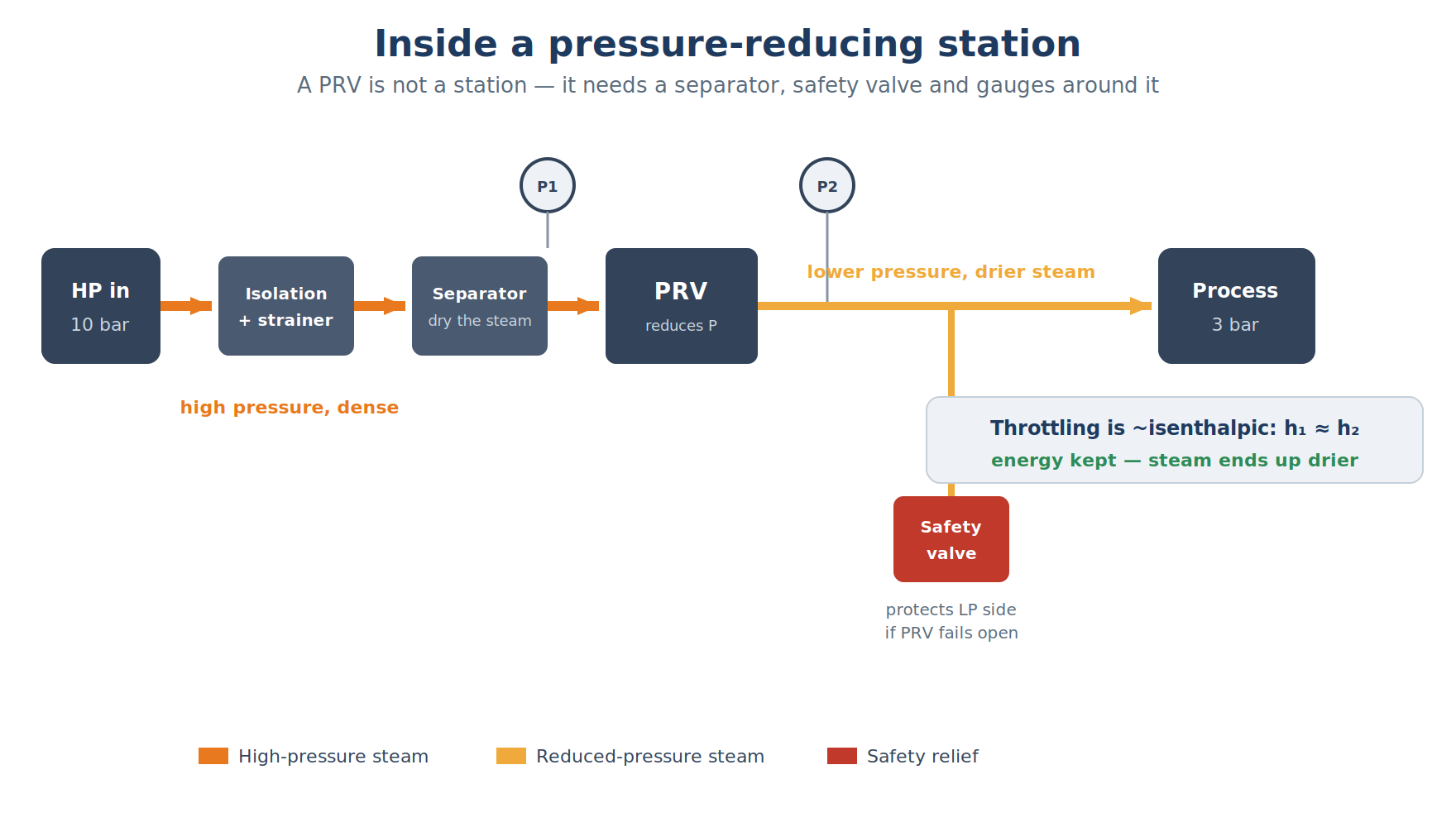
A pressure-reducing station is more than a valve: isolation, strainer, separator, PRV, gauges and a safety valve on the low-pressure side.
Sizing: the mistake that undoes everything
The most common pressure-reduction fault is a PRV sized on pipe diameter rather than on duty. Line-size is not valve-size. A valve chosen because it matches the pipe is very often oversized for the actual flow, which makes it hunt — cycling open and shut, overshooting the set pressure, wearing its seat and never settling. An undersized valve, conversely, can't pass enough steam and the downstream pressure sags whenever demand rises.
Correct sizing works from the real steam load, the upstream and downstream pressures and the required turndown. Where the flow varies widely — a process that idles then surges — a single valve often can't cover the range cleanly, and two valves in parallel (or a pilot-operated design) give far better control. This is a design calculation, not a catalogue pick, and it belongs in proper steam system design.
Estimating the downstream conditions
For a first pass at what reduction does to steam quality, an energy balance across the valve holds total heat (enthalpy) roughly constant — the throttling is close to isenthalpic:
h₁ ≈ h₂
Because the specific enthalpy of saturated steam changes only slightly across a modest pressure drop while the saturation temperature falls, the steam ends up with a small amount of superheat or a higher dryness fraction on the low-pressure side. In plain terms: you lose pressure and temperature but keep the energy, and the steam gets drier. Detailed figures come from steam tables for the specific pressures involved; treat this as a scoping guide.
Where pressure reduction goes wrong on real plants
Beyond sizing, a handful of faults show up again and again:
- No separator upstream. Wet steam hitting a throttling valve erodes the trim and destroys control. Dry the steam before you reduce it.
- No or undersized safety valve. As above — a non-negotiable on the low-pressure side.
- Reducing too far, too early. Dropping pressure a long way upstream of the process re-introduces all the large-pipe, high-loss problems that distributing high was meant to avoid. Reduce close to the load.
- No feedback on performance. A PRV drifting off its set point wastes energy and quietly hurts product quality. Metering pressure and flow around key stations makes that visible — the role of steam and water metering.
- Ignoring the knock-on to heat transfer. Lower pressure means lower steam temperature, which changes the output of every heat exchanger downstream. Reduction set-points and heat-transfer duty have to be designed together, not in isolation.
Getting it right pays for itself
Well-executed pressure reduction is one of those upgrades where the benefits stack: drier steam at the process, stable and repeatable control, less erosion and maintenance on valves, and a distribution network that can run at its efficient high pressure while every process still sees exactly what it needs. It's part of the same disciplined approach to steam systems that let us deliver millions in savings and sub-12-month paybacks on major projects.
If your reducing stations hunt, hammer or leak — or you're not sure they're sized for the duty they're on — a review is the sensible first step. Whether the fix is a re-sized valve, a rebuilt station or a wider redesign delivered under turnkey installation and project management, get in touch and we'll help you get the pressure right.