Hot Water System Optimisation

HOT WATER SYSTEM OPTIMISATION – Reliability and Energy Savings
The Customer
Kellogg’s is one of the global market leaders in cereal and confectionery manufacturing. It’s the only Kellogg’s manufacturing facility in Australasia supportingAustralia, NZ and Parts of Asia.
The Need
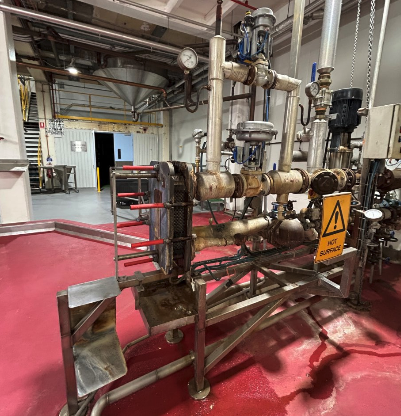
The cereal and confectionery manufacturing process requires precise hot water temperature for the process and cleaning. The hot water flow rate can vary from 0.3l/s to 15 l/s. Till June 2025, Kellogg’s has been using a plate and frame heat exchanger(PHE) with a small controller with no data on the flow of steam and water. The PHE used to leak, and the steam was contacting the gaskets, resulting in very uneven temperature control on the process and cleaning hot water side. The SCADA visibility was unavailable for remote monitoring and diagnosis.
The Engineered Solution
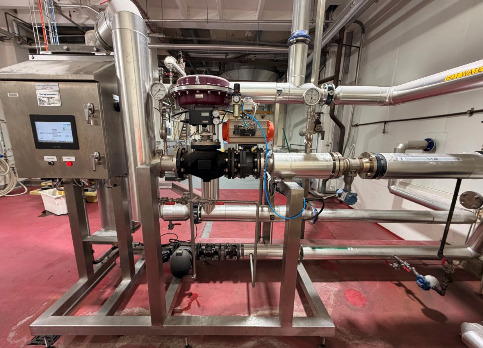
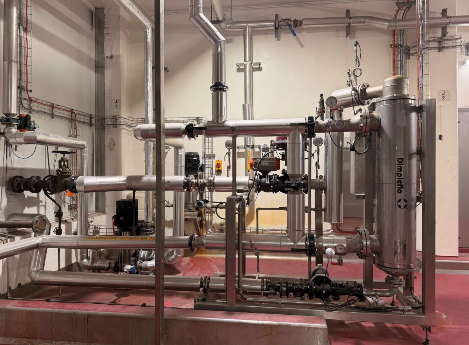
Kellogg’s approached Energy Specialties to design a turnkey solution to precisely control the hot water outlet, improve reliability and reduce the steam demand for the system. This resulted in a bespoke hot water heat exchanger Package, fabricated to fit the limited space available. In addition, the shell and tube heat exchanger was designed with a steam flowmeter, a water flowmeter, a pressure transmitter and temperature transmitters for better control of Hot water temperature and reducing the steam consumption.
The Result
The vertical shell and tube heat exchanger uses 8 barg steam to generate hot water from 20 degC to 70 deg C, and reuses condensate sensible heat to reduce the live steam demand. In conjunction, the heat exchanger package has been designed to shut the steam supply, with none of the pumps in operation, reducing the steam loss and improving the life of the equipment by 30%.